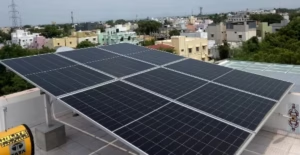
3kW Solar Installation in Bharathipalayam, Erode | Somasundharam’s Home Solar Project
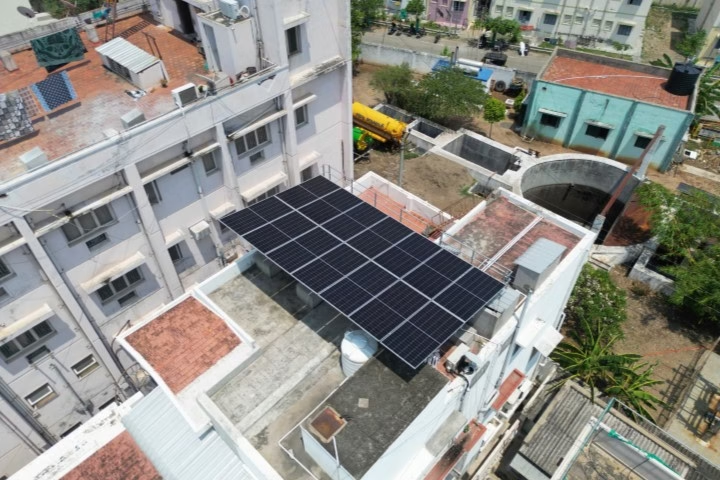
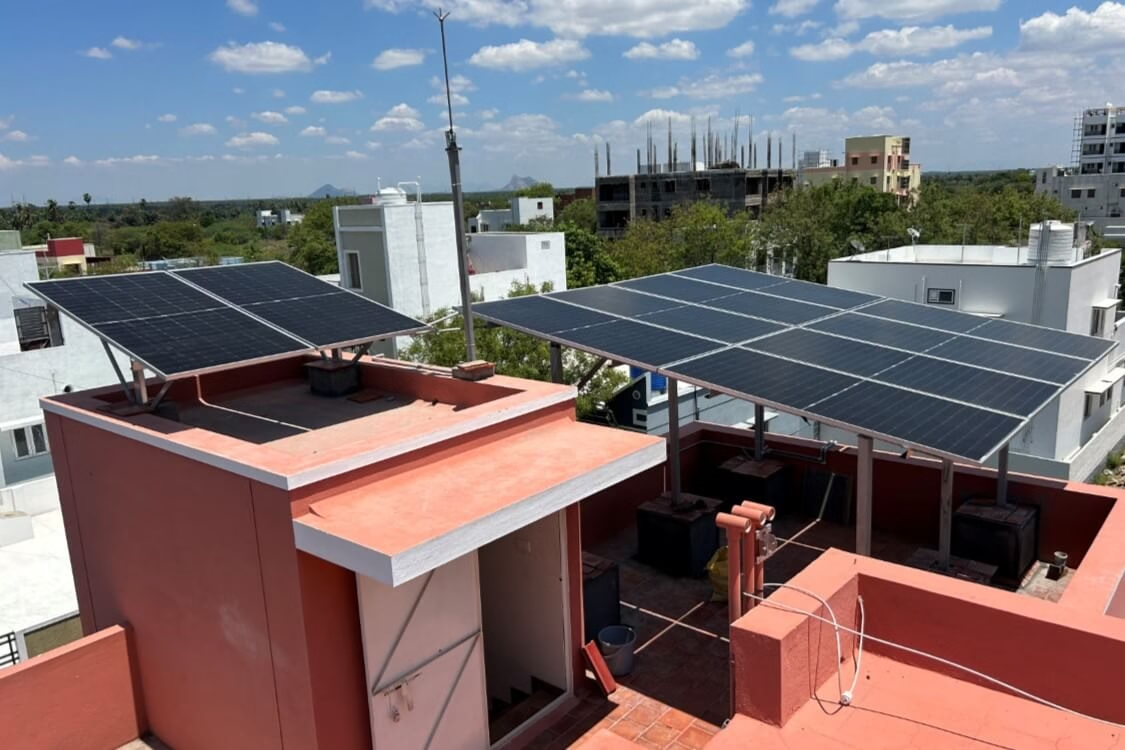
3kW home solar installation in Bharathipalayam, Erode by Groena Solar, with bank loan and PM Surya Ghar subsidy support.

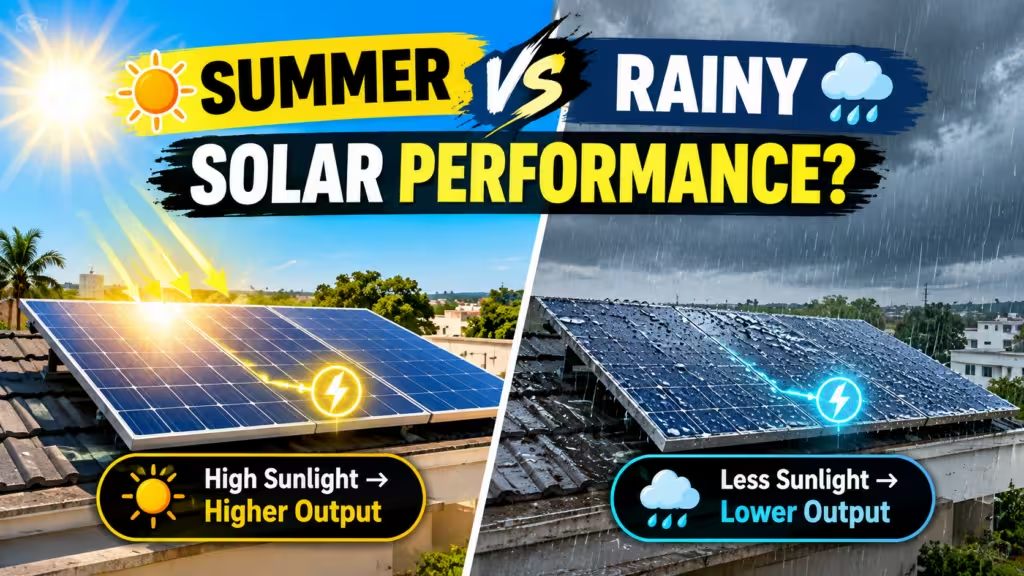
“Solar works only in summer. It stops in the rainy season, and it stops in winter too.”
Almost every homeowner who thinks about rooftop solar hears this at some point. It sounds sensible, but it is a myth. Solar panels generate electricity from light, not heat. They can keep producing in summer, the rainy season and winter, although output changes with sunlight availability and panel temperature.
This guide explains solar panel performance in summer vs rainy season in simple language. It covers why summer can produce more electricity, why extreme heat still hurts panel performance, and what all of this means for rooftop solar in Erode, Tamil Nadu.
The confusion usually comes from comparing a solar panel with a solar water heater.
A solar water heater uses the sun’s heat to warm water. It works best on hot, bright days, and everyone has seen it give lukewarm water on a cloudy morning. It is natural to assume solar electricity behaves the same way.
It does not. A solar PV panel is a different device with a different principle. It does not produce heat for you to use. It converts light into electricity. Once you see that difference, the “summer only” story stops making sense.
Many homeowners are looking for AC power saving tips this summer. While many people suggest keeping the AC at 24°C, the truth is that an AC will always use a lot of power. The best way to save is not by using less AC, but by using “Solar Power.”
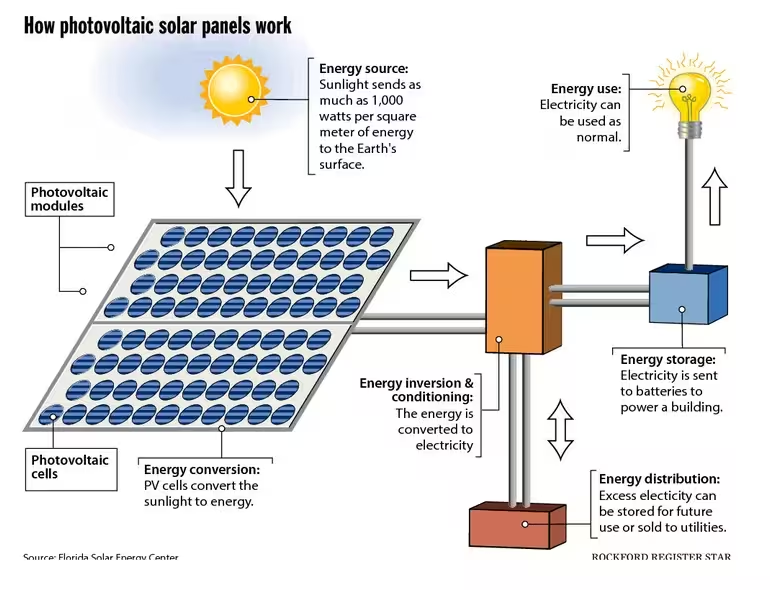
Rooftop solar panels are made of many photovoltaic cells, usually called PV cells. A PV cell is a semiconductor device, commonly made of silicon, that produces an electric current when light falls on it.
In simple steps:
| Solar PV panel | Solar water heater | |
|---|---|---|
| Purpose | Produces electricity | Heats water |
| Works on | Light (photovoltaic effect) | Heat collected from sunlight |
| Output | Electricity for the home | Hot water |
Yes. Solar panels can generate electricity in the rainy season, but output is usually lower when clouds and rain reduce the sunlight reaching them.
Because PV panels run on light, they do not need a blazing hot day. Even under an overcast sky, some diffused sunlight reaches the panels, and they convert it into electricity. Heavy cloud and steady rain cut the available light, so generation falls. It does not go to zero just because it is raining.
Your actual output on a rainy day depends on:
We do not quote a fixed “percentage of summer output” for the monsoon. It changes from day to day and from roof to roof.
What is the 3kW solar price Erode after the government subsidy? This is the most common question we hear at Groena Solar. For a 3kW system in 2026, the total cost is usually between ₹1,60,000 and ₹1,90,000.
Here is how the two seasons compare, factor by factor.
These two ideas are often mixed up:
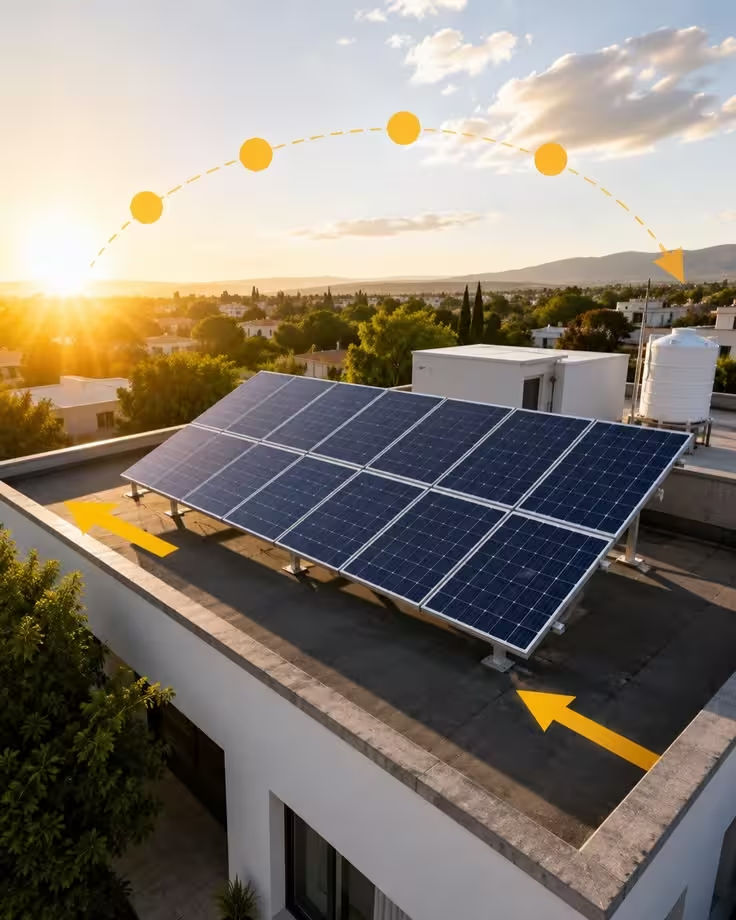
A hot summer panel may be slightly less efficient, but strong sunlight over a long day can still give higher total generation than a dull, rainy day. Longer daylight helps, but it does not guarantee higher output in every situation. Haze, cloud, shading or a fault can change the result.
| Factor | Summer | Rainy Season |
|---|---|---|
| Sunlight availability | Clear skies are more common, so more direct sunlight reaches the panels. | Clouds scatter and block light. Sunlight is often diffused and changes through the day. |
| Daylight duration | Sunrise is earlier and sunset is later, giving a longer generation window. | Daylight may be shorter or interrupted by heavy cloud. |
| Panel temperature | Panels can become very hot, which reduces efficiency. | Panels usually run cooler, which helps efficiency, but there is less light to convert. |
| Solar generation | Total daily generation can be high when sunlight is strong and days are long, though heat trims efficiency. | Total daily generation is usually lower on cloudy or rainy days and varies with the weather. |
| Weather impact | Heat, dust and haze can affect output. | Cloud cover and rain reduce available light. Rain can also wash dust off the panels. |
If you are considering residential solar installation in Erode, these factors shape how a system performs:
Good rooftop solar installation in Erode starts with an on-site assessment of these points rather than a copy-paste design.
You do not need technical knowledge to keep an eye on your system.
Please do not treat any general statement, including ours, as a promise of a fixed generation figure or electricity bill reduction. Real output depends on your roof, your weather and your system.
Yes. Solar panels can generate electricity in the rainy season because they respond to diffused sunlight passing through clouds. Output is usually lower than on a clear day, and how much lower depends on cloud thickness, rain duration and the condition of your system.
Direct sunlight gives the best output, but panels do not need it to work. PV cells can also convert diffused light, such as on a cloudy day. Electricity generation is simply lower when less light reaches the panels.
Often yes, but suitability depends on the individual home. Roof space, orientation, tilt, shading and your electricity consumption all matter. A site inspection is the best way to judge whether rooftop solar is practical for your house in Erode, Tamil Nadu.
Most inverters provide a monitoring app or web portal with daily, monthly and lifetime generation data. You can also read the inverter display. Compare readings on similar weather days, and contact your installer if generation drops unexpectedly.
Yes. Panels work in winter whenever sunlight is available. Output depends on daylight hours, cloud cover, sunlight intensity and panel temperature. Cooler panels can be more efficient, while shorter days or overcast skies can reduce total generation.
Conclusion
Don’t let the Erode heat or the TNEB bill stress you out. If you are buying an AC, think about Solar as a package deal. It is the only investment that pays for itself by saving you money every single month.
Groena Solar provides residential solar consultation, site inspection and system planning to help homeowners understand their rooftop solar requirements.
Call: 94441 55479
Website: https://www.groena.in/
3kW home solar installation in Bharathipalayam, Erode by Groena Solar, with bank loan and PM Surya Ghar subsidy support.
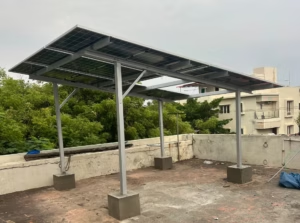
See how a 3kW solar panel system was installed for a residential home in Periyar Nagar, Erode. Explore the installation setup, solar panel placement, and benefits of switching to solar energy with Groena Solar.
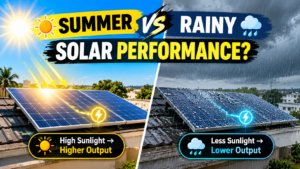
Do solar panels work in the rainy season? Learn how rain, cloudy weather, and sunlight affect solar panel performance and electricity generation. Discover how solar panels perform in summer and rainy seasons and what homeowners can expect from rooftop solar systems.
Please read terms & condition, and privacy policy before you submit newsletter
All Rights Reserved @ 2024, Designed By Designe.in
Feel free to reach us for free consultation and move towards your future with renewable energy.

Your application has been received. Thank you for applying.! (உங்கள் விண்ணப்பம் பெறப்பட்டது. விண்ணப்பித்ததற்கு நன்றி)